
Kala Metropolitan Curly Mango Tenor KA-MNGG-T Review High G vs Low G and Mango vs Acacia
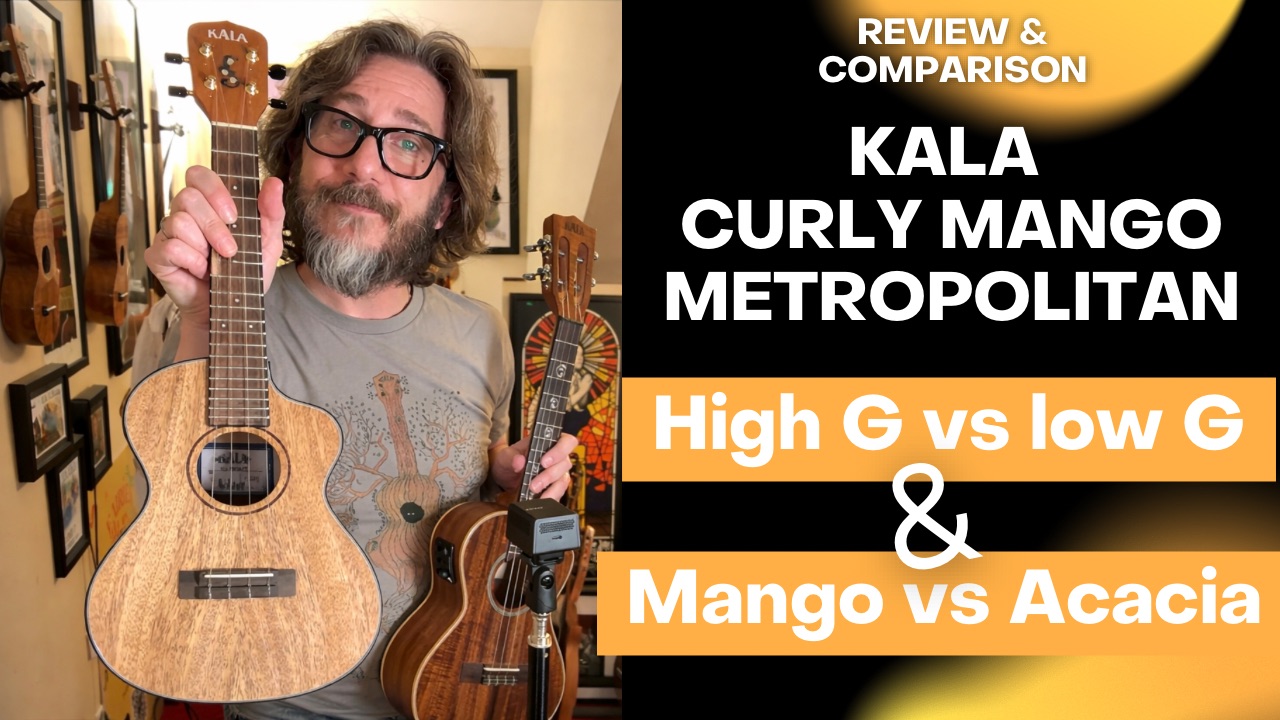
Kala Metropolitan Curly Mango Tenor is the ukulele I’m featuring in this review, and I was honestly excited the moment I opened the case. This was my first time playing a mango ukulele, and I wanted to hear how it compared to my longtime favorite all-solid acacia tenor. I also wanted to answer a question a lot of players ask all the time: High G vs Low G ukulele — what’s the difference, and which one sounds better?
In the video above, I play the exact same instrument with both string setups and then compare the mango wood ukulele tone directly against an acacia tenor. If you grab some headphones you’ll really hear the difference.
First Impressions of the Kala Metropolitan Curly Mango Tenor
The first thing that jumped out at me about the Kala Metropolitan Curly Mango Tenor was the wood. The curly mango grain on this instrument is absolutely beautiful. Pictures don’t really capture it properly because when the light hits it, the figuring in the wood really comes alive.
This model is part of Kala’s Metropolitan Series, and you can tell right away that a lot of care went into building it. The inlay work on the headstock is gorgeous, the tuners feel solid, and the whole instrument just has a refined look.
I didn’t know exactly what to expect from mango tonewise since this was my first mango uke. It’s often described as being similar to koa, so I was curious to hear how it stacked up against my all-solid acacia tenor that I’ve been playing for years.
High G vs Low G Ukulele Sound Comparison
One of the most common questions I hear from players is about High G vs Low G ukulele tuning. The Metropolitan Curly Mango Tenor comes from Kala with a high G string, which is the traditional ukulele setup.
With a high G configuration, the fourth string is tuned higher than the third string. That gives the instrument that classic re-entrant ukulele sound where the notes bounce upward when you strum.
After playing it for a while with the high G, I swapped the strings so I could show the difference with a low G setup.
When you switch to a low G, the fourth string becomes the lowest note on the instrument. The sound immediately becomes deeper and more guitar-like.
Here’s what stood out to me when comparing the two:
- High G
- Classic ukulele sound
- Brighter and slightly more traditional tone
- Great for rhythmic strumming
- Low G
- Fuller and deeper low end
- More sustain and body
- Works great for melodic playing and fingerstyle
My personal preference is the low G. If I only had one ukulele, that’s probably how I’d keep it strung. But honestly, there’s no right or wrong answer here. Many players keep both around because they serve different musical purposes.
Mango Wood Ukulele Tone Compared to Acacia
Another big part of this review was comparing the mango wood ukulele tone against acacia.
Both of the ukuleles I used in the comparison are all-solid wood instruments, meaning the top, back, and sides are all made from solid tonewood rather than laminate. That’s important because solid wood tends to age and open up over time.
When I played the two instruments back to back, the differences were pretty clear.
The acacia tenor that I’ve used for years has a darker sound. It’s warm, a little more subtle, and it sits nicely underneath vocals. That’s one reason I reach for it so often when I’m singing.
The mango tenor, on the other hand, had more shimmer and sustain. The notes ring longer, and the overall tone feels a little more balanced across the frequency range.
Here’s how I’d describe the two:
- Acacia
- Darker overall tone
- Slightly more subtle
- Great under vocals
- Curly Mango
- Brighter with more shimmer
- Longer sustain
- Projects a little more
Neither is better or worse. They’re just different tools for different musical situations.
Playability and Build Quality
Another thing I noticed right away was how solid this instrument feels.
The tuning stability is excellent. Once the strings settled in, the uke stayed right where it should. Intonation is also spot on up the neck, which is something I always pay attention to as a working musician.
Playability is smooth and comfortable, which is exactly what you want whether you’re performing, recording, or just relaxing and playing at home.
Exclusive Kala Discount for Me & Uke Friends and Fans
If you’re interested in this ukulele or any other Kala instrument, I have an exclusive discount for Me & Uke friends and fans.
You can use my link here:
https://kalabrand.com/meanduke
When you use that link, the discount is automatically applied at checkout. You can also simply enter the discount code MEANDUKE at checkout.
If you’d like to go directly to this specific ukulele, you can also view the Kala Metropolitan Curly Mango Tenor here:
https://kalabrand.com/products/all-solid-curly-mango-metropolitan-tenor-ukulele?_pos=1&_sid=76d597733&_ss=r
It saves you some money and also helps support the channel so I can keep making reviews, music, and videos like this.
So it’s a win-win.
Hearing the Difference for Yourself
The best way to understand the Kala Metropolitan Curly Mango Tenor, the High G vs Low G ukulele sound, and the character of mango wood ukulele tone is simply to listen carefully.
That’s why in the video I played chords and strumming patterns back to back on both instruments so you can really hear how the tonewoods and string setups change the sound.
Both ukuleles are beautiful in their own way, and which one you prefer will come down to your playing style and the kind of music you want to make.
If you have questions about this instrument or any other Kala ukulele, feel free to reach out. I always enjoy talking with other players and hearing what you’re working on musically.
Check out more uke reviews here.